
M09 completed the core path with verifiable automation. M10 opens the
optional specializations: the same cantilever-beam family, but with a
more slender variant whose response is no longer linear. You will enable NLGEOM,
solve with substeps, add bilinear plasticity, and compare load–displacement curves using
numerical evidence.
Your mission
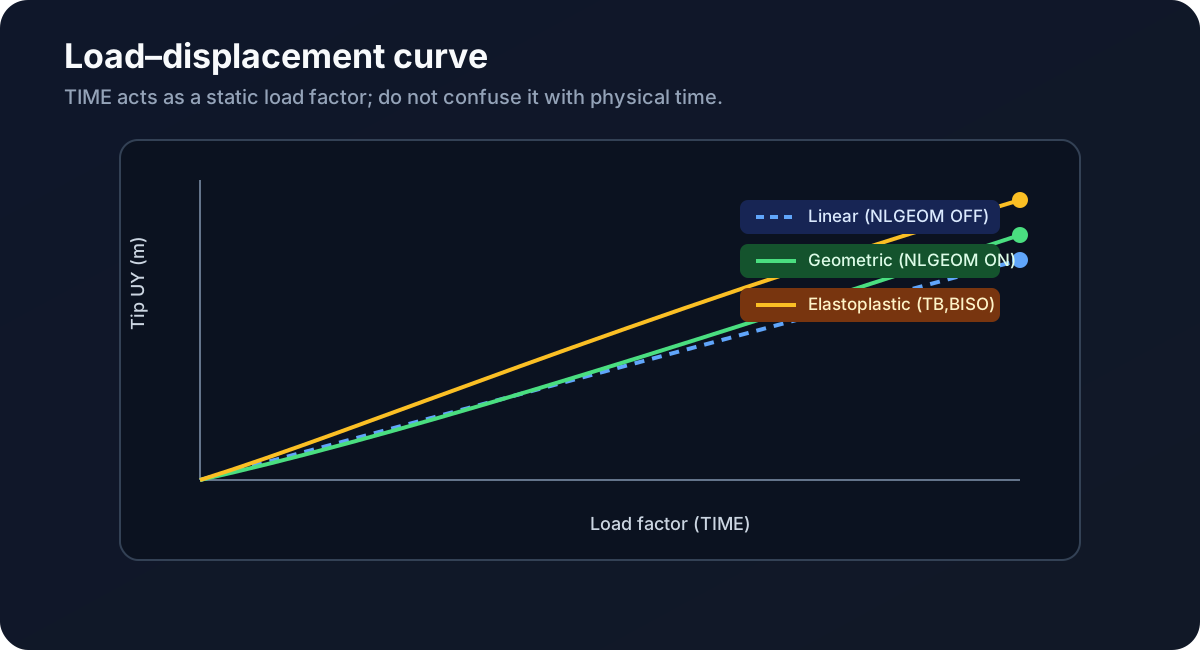
You will run three progressive cases—linear, geometrically nonlinear, and elastoplastic—plot the load–response curve, read convergence in the .out file, and document the source of each deviation in CSV.
Guiding question: can you prove when the linear model stops being valid?
Objectives
After completing M10, you will be able to:
- Enable
NLGEOM,ONand solve with progressive ramping (KBC,0,NSUBST). - Define bilinear plasticity with
TB,BISOandTBDATA. - Extract a load–displacement curve from POST1 with
OUTRES,ALL,ALL. - Check convergence (
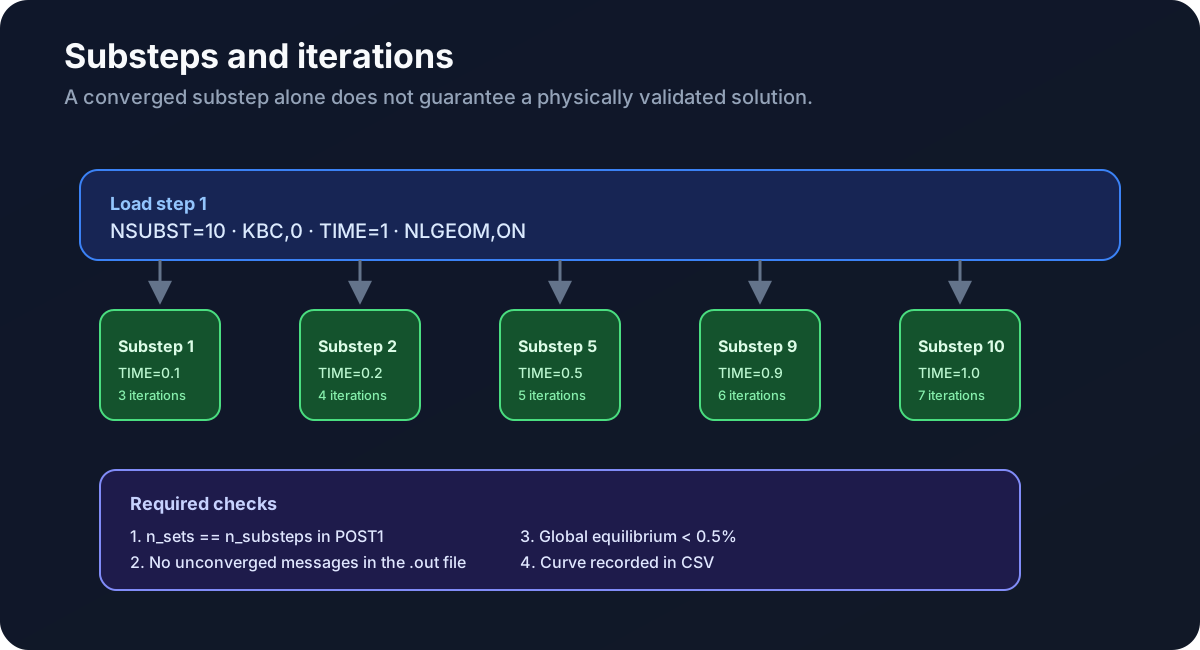
n_sets = n_substeps) and global equilibrium. - Quantify
geom_dev_ratioandplastic_dev_ratioagainst the baseline. - Distinguish static load factor, substep, and equilibrium iteration.
Prerequisites and downloads
- M07: linear validation with
passes=1. - M06: substeps and the meaning of
TIMEas a load factor. - Optional M07 extension: curve with POST26.
10_start.mac— starting point.10_static_nonlinear.mac— audited deliverable.10_bug_hunt.mac— five faults.10_challenge.mac— verifiable challenge.10_expected_results.csv— numerical contract.load-displacement-linear-vs-nl.svg— curves.convergence-substeps.svg— substeps.
How to use this lesson
| Path | Duration | Coverage |
|---|---|---|
| First win | 20–25 min | Linear baseline + NLGEOM with ramping and first CSV. |
| Complete | 70–75 min | Plasticity, full curve, debugging, challenge, and mastery. |
Session map
- Mission: objectives, downloads, and prediction.
- Mental model: linear versus geometric versus material.
- Demonstration: baseline, NLGEOM, curve, and plasticity.
- Debugging: five common faults.
- Challenge: modify the load and explain the curve.
- Mastery: final M10 test.